-
Free Delivery
-
Buy Direct from the Makers
-
Aftersales Support
Summer Renovation Season: Why You Need a Dust Extractor
Share

Summer is the peak season for home extensions and DIY remodeling projects throughout Europe. Long daylight hours and predictable weather offer the perfect environment to remodel interior walls, tile kitchens, or sand wooden decks. However, amidst the excitement of drafting plans and choosing paint colors, everyday DIYers and some contractors often overlook a critical, invisible danger: construction dust.
The Hard Truth: Standard domestic vacuums are built for cleaning up light debris like common household dust, crumbs, and hair. Forcing them to clean ultra-fine drywall fibers, masonry silica, or hardwood sawdust following a renovation project will instantly clog their filters, burn out their motors, and risk microscopic pollutants remaining in your living space.
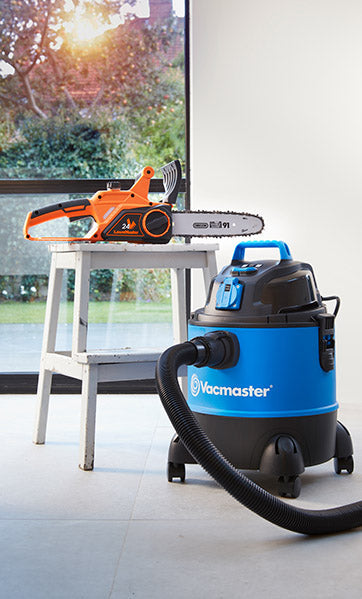
For most experienced renovators, investing in a certified dust extractor for home renovation is non-negotiable. Below, we break down why effective dust extraction matters — and why M & L Class dust extractors, like those from leading brand Vacmaster, are an essential.
The Hidden Dangers of Renovation Dust
Many assume that a standard face mask and an open window are sufficient to manage the risk of construction dust during a project. This isn't the case. The human respiratory system is capable of filtering out large, visible dust particles, but it is vulnerable to microscopic particles smaller than 2.5 micrometers.
Alongside this, masonry, brickwork, mortar, and ceramic tiles contain crystalline silica. When these materials are cut, drilled, or chased, they release respirable crystalline silica (RCS) dust — a known carcinogen linked to severe, irreversible lung conditions like silicosis when inhaled over extended periods.
Modern building materials also present their own unique hazards:
- Sanding joint compound during drywall installation releases ultra-fine gypsum and mica fibers that float in the air for days, finding their way into HVAC ductwork, electronic appliances, and clothing.
- Properties built before the late 1990s may contain lead-based paint particles that are released when old walls are disturbed.
- Even standard softwoods and hardwoods produce wood dust officially classified as an occupational carcinogen.
This fine particulate matter irritates eyes, triggers acute asthma attacks, and significantly decreases overall indoor air quality. Managing these microscopic particles is not just a matter of structural cleanliness — it is an essential part of seasonal health management, as outlined in our guide on How to Beat Summer Allergies with Vacmaster: 3 Home Cleaning Tips.
Why Standard Vacuum Cleaners Fail at Home Renovation Tasks
It is incredibly tempting to grab your faithful domestic upright or cordless stick vacuum to clean up drywall dust or plaster spills after a hard day of remodeling. However, doing so may permanently damage your household appliance.
Standard vacuum cleaners are engineered to capture large, low-density household debris like pet hair, carpet fibers, crumbs, and surface dirt. They rely on simple, porous bags or basic cyclonic plastic bins that lack airtight seals. When fine, high-density construction dust enters a standard vacuum, it instantly clogs the microscopic pores of the filter material — reducing vital airflow, causing the electric motor to rapidly overheat and burn out.
Furthermore, because domestic filters cannot trap microscopic particles, the vacuum's powerful exhaust port acts like an airborne fan, blasting fine white dust back into the room. This transforms a localized pile of debris into an airborne fog that settles over your kitchen countertops, bedding, and upholstery, creating a secondary cleanup need.
A professional dust extractor for home renovation, like those from the Vacmaster L-Class range, addresses this problem by combining multi-stage certified filtration, heavy-duty bypass motors, and integrated tool-trigger technology.

Introducing the Vacmaster Certified L-Class Dust Extraction Range
At Cleva, we have engineered an elite range of professional dust extraction machinery designed to work seamlessly with your power tools, capture dangerous dust right at the point of creation, and maintain a clean workspace. For home renovation projects, two heavy-duty models stand out as the ultimate worksite companions.
1. Vacmaster WD L20 240V Dust Extractor (VK1620SWC 03)
If you are a passionate DIYer tackling room renovations, updating flooring, or installing built-in cabinetry, the Vacmaster WD L20 represents the perfect blend of compact, agile design and commercial-grade extraction power. This machine is independently certified as an L-Class dust extractor, legally proven to safely capture 99% of dust particles with occupational exposure limits greater than 1 mg/m³ according to EN 60335-2-69:2012.
Equipped with a compact yet durable 20-litre impact-resistant collection tank, the WD L20 is incredibly easy to maneuver through narrow hallways, up staircases, and into tight spaces. At its core is a 1600W Twin Fan Bypass Motor paired with an integrated Power Take-Off (PTO) socket. This allows you to plug your sander, jigsaw, or wall chaser directly into the extractor — when you switch your power tool on, the extractor turns on automatically, capturing dust before it becomes airborne.
2. Vacmaster WD L38 240V Dust Extractor (VK1638SWC 03)
For large-scale building extensions, intensive masonry work, entire property restorations, or trade professionals who demand relentless high-capacity runtime, the Vacmaster WD L38 is a heavyweight champion of the job site. Boasting a massive 38-litre heavy-duty stainless steel tank mounted on a rugged reinforced trolley steel chassis with large rear wheels and multidirectional front castors, this machine is engineered to survive the harshest structural environments.
The WD L38 expands on certified L-Class filtration with powerful dual-filtration, featuring a large surface-area cartridge filter and a push-clean filtration system. When fine dust begins to restrict airflow on long-duration tasks, simply press the integrated push-clean button to instantly blast dust off the filter and restore peak suction power — without opening the tank. Like its smaller sibling, it features an intelligent 240V PTO socket for seamless power tool synchronization.

Comprehensive Feature Comparison: Choosing the Best Dust Extractor
To help you select the exact level of extraction required for your upcoming summer projects, here is a direct technical comparison of both L-Class extractors:
| Feature / Specification | Vacmaster WD L20 (VK1620SWC 03) | Vacmaster WD L38 (VK1638SWC 03) |
|---|---|---|
| Dust Class Certification | L-Class Certified (99% Filtration Efficiency) | L-Class Certified (99% Filtration Efficiency) |
| Tank Capacity & Material | 20 Litres / Heavy-Duty Stainless Steel | 38 Litres / Heavy-Duty Stainless Steel |
| Power Take-Off (PTO) Socket | Yes (Automatic Power Tool Synchronization) | Yes (Automatic Power Tool Synchronization) |
| Filter Cleaning Mechanism | Washable Pre-filter / Manual Filter Maintenance | Push-Clean System + Washable Pre-filter |
| Chassis & Portability | Compact 4-wheel castor system for high agility | Rugged steel trolley with push handle & large wheels |
| Best Suited For | Medium DIY, carpentry, drywall sanding, car detailing | Heavy construction, masonry, trade work, high-volume cleanup |
Choosing between these two powerhouses depends entirely on the scale of your summer remodeling work. For agile, single-room projects where storage space is tight, the WD L20 offers exceptional value and elite filtration. For professional builders or homeowners embarking on large-scale home extensions, the rugged stainless steel WD L38 provides the industrial runtime and specialized filter-cleansing technology needed to keep working without interruption.
The Crucial Advantages of a Dedicated Dust Extractor
Integrating a certified Vacmaster L-Class dust extractor into your cleaning arsenal delivers deep operational rewards that go far beyond basic tidy habits.
- Protects Your Health: Certified for low-hazard dusts with occupational exposure limits greater than 1 mg/m³ (EN 60335-2-69:2012), an L-Class extractor reduces the risk of you, your family, and your pets breathing in dangerous silica, toxic plaster fibers, or allergic wood dust.
- Improves Power Tool Longevity: Power tools generate heat, and their internal fans draw in surrounding air to cool down. If the air is thick with construction dust, that dust settles inside your expensive sanders, routers, and saws, causing mechanical friction and premature failure. Extracting dust directly from the tool port keeps your gear running cool and extends its lifespan.
- Delivers Professional Project Results: When painting, lacquering wood, or applying epoxy finishes, even a tiny amount of floating dust can settle onto the wet surface, ruining your finish with ugly bumps and blemishes. A dust-free room ensures flawlessly smooth paint layers and pristine wood stains.
- Minimizes Post-Project Cleanup: Without active source extraction, fine dust travels through doorways and settles into every corner of your property. By capturing dust the instant it leaves the blade or sanding pad, you eliminate hours of grueling post-renovation washing, wiping, and deep-cleaning.

Unlock a Healthier, Efficient Renovation Season
Your home is your most valuable asset, and upgrading it should be an incredibly rewarding journey. Integrating a dust extractor into your renovation process permanently transforms how you work. It keeps your workspace tidy, ensures your high-end power tools perform at their absolute best, and protects the surrounding living areas from fine, migratory construction dust.
Ready to transform your home without the mess?